 Ano
AnoGuide · Chem Film
Chromate Conversion Coating, Chem Film and Alodine
Four names describe one coating: a thin chemical film that protects aluminum from corrosion while leaving it electrically conductive. It is the finish specified when Anodizing would insulate a part that needs to conduct.
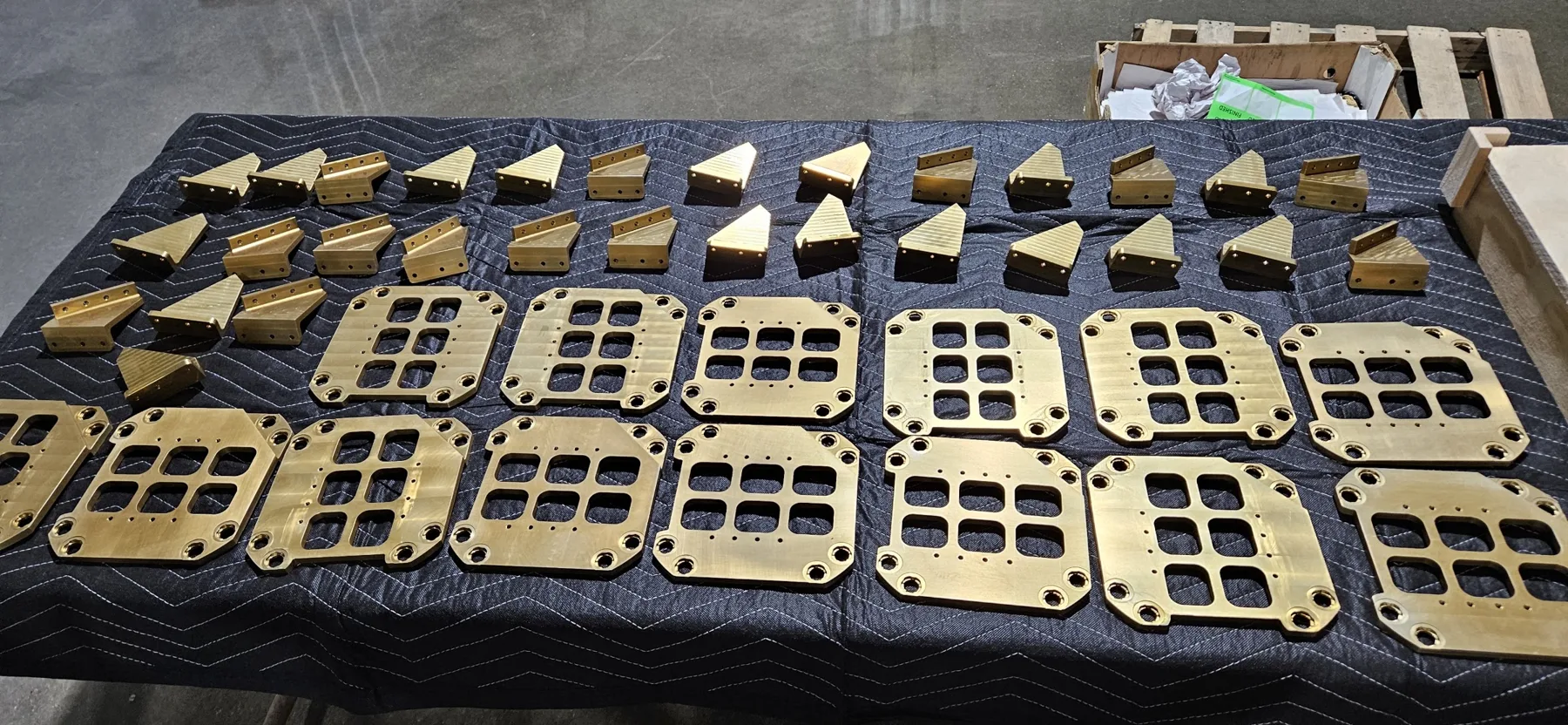 GOLD FINISH WORK · THE BENCH
Why This Coating Has Four Names
The confusion is historical rather than technical. Chemical conversion coating is the accurate description: a chemical reaction converts the aluminum surface into a protective film. Chem Film is what everybody in a shop actually says. Alodine is a Henkel brand name that became the generic word for the process, the way people say a brand when they mean a photocopy. Chromate or chromate conversion describes the chemistry family the coating comes from.
All four land in the same tank. If your drawing says any of them, or cites MIL-DTL-5541 or the older MIL-C-5541, it is asking for the same process. That matters commercially because buyers often assume they need a specialist for one of the names, and end up sourcing the same coating from three different vendors under three different words.
What Alodine Does That Anodizing Cannot
The defining property is conductivity. Anodizing builds an oxide layer that is an electrical insulator, which is a feature on most parts and a defect on some. If a housing has to carry a ground path, if two surfaces have to bond electrically, or if a panel is part of an EMI shielding scheme, an anodized surface breaks the function no matter how well it was applied.
A chemical conversion coating protects the aluminum while leaving it able to conduct. Class 3 in particular exists specifically for low contact resistance. That is why avionics enclosures, ground planes, bonding surfaces and equipment chassis carry a 5541 callout rather than an 8625 one.
The second property is thinness. The film is well under a ten-thousandth of an inch, which makes it dimensionally negligible for practically all machined work. When a part cannot afford the dimensional change Anodizing brings, this is frequently the finish it actually wants.
The third is that it is the standard base under paint on aluminum. Paint adheres poorly to bare aluminum and well to a converted surface, so a great many painted aluminum assemblies carry a conversion coating underneath that nobody outside the process ever sees.
| THE PART NEEDS | CALL OUT | WHY | TRADE-OFF |
|---|---|---|---|
| Weather or salt exposure | Class 1A | Thickest film, maximum corrosion protection | Higher contact resistance |
| A grounding or bonding path | Class 3 | Thinner film, lowest contact resistance | Less corrosion protection |
| A base under a paint system | Class 1A typically | Best adhesion and protection | Check the paint specification |
| EMI shielding surfaces | Class 3 | Conductivity is the entire point | Handle and pack carefully |
Type I and Type II Chemistry, and Why It Is Changing
The specification's types describe the chemistry rather than the job. Type I is the traditional hexavalent chromate formulation, which has the longest service record and, in its traditional form, a degree of self-healing where the film gets scratched. Type II is the trivalent chromium alternative, developed because hexavalent chromium is subject to tightening health and environmental restriction.
What this means practically for a buyer is that your own customer's policy may now dictate the type, independent of what the part needs. Increasingly we see drawings specifying Type II for reasons that have nothing to do with the engineering. If your program has a requirement here, put it on the request for quote so the right chemistry runs the first time.
Clear or Gold, and Why the Color Is an Inspection Decision
Conversion coatings are supplied clear or gold. The practical difference is not appearance but verification: a gold film is visible, so an inspector can confirm at a glance that the coating is present and covers the whole part. A clear film performs the same job and is invisible, which is preferred where appearance matters and awkward where somebody downstream has to prove coverage.
If your drawing names a class but no color, we ask. It is a small question that prevents a large argument at receiving inspection. If a drawing does not call out a type, MIL-DTL-5541 defaults to Type I.
The Most Common Sourcing Mistake
Assuming Chem Film is a lesser finish than Anodizing because it is thinner and cheaper to apply. They do different jobs. A grounding surface anodized to a beautiful Type II finish is a failed part. Choose on function, not on which process sounds more substantial.
How Alodine Chem Film Is Actually Applied
The process is chemically simple and unforgiving about preparation. Parts are cleaned thoroughly, deoxidized to strip the natural oxide film and expose genuinely bare metal, rinsed, then immersed in or sprayed with the conversion chemistry for a controlled time. A final rinse and a gentle dry finish the job.
Almost every conversion coating defect traces back to the cleaning and deoxidizing steps rather than to the conversion itself. The chemistry reacts with bare aluminum; wherever the surface was not bare, the film is thin, patchy or absent. That is why this step gets the time it takes rather than the time that would be convenient.
Two handling notes matter afterward. A fresh conversion coating is soft for a period while it cures, so parts are handled and packed carefully rather than immediately stacked. And on Class 3 work, the whole point is low contact resistance, so the surfaces that carry it are protected in packing rather than left to rub against each other in transit.
Alodine and Anodizing on the Same Part
Plenty of real assemblies need both. A machined enclosure might want an anodized exterior for durability and appearance, with conversion-coated pads where a lid grounds to the body or where a connector bonds through the wall. That is a masking job: the zones get marked on the print, and the two processes run in the correct sequence so neither damages the other.
We run both processes in the same building in Paoli, which is the reason a dual-finish part stays a single job with one date on it here rather than making a trip between two vendors. Our Alodine chem film service page covers how we run it. See masking, plugging and assembly for how those zones are quoted.
Common Questions
Is Alodine the Same as Chem Film?
Yes, in everyday use. Alodine is a Henkel trade name that became the generic word for chemical conversion coating on aluminum. Chem Film is the shop term, chromate describes the chemistry, and MIL-DTL-5541 is the governing specification. A drawing using any of those words is asking for the same coating.
Is Chromate Conversion Coating Electrically Conductive?
Yes, and that is its defining advantage over Anodizing. Class 3 is specified where low contact resistance matters, on ground planes, bonding surfaces and EMI shielding. Class 1A conducts as well but carries a thicker film, so contact resistance is higher.
Does Chem Film Change Part Dimensions?
The film is well under a ten-thousandth of an inch, so it is dimensionally negligible for practically all machined work. If you are holding something unusually tight, tell us and we will confirm against your specific tolerance.
What Is the Difference Between Type I and Type II Chem Film?
The chemistry. Type I is the traditional hexavalent chromate formulation and Type II is the trivalent chromium alternative, developed in response to restrictions on hexavalent chromium. Many programs now specify Type II by policy rather than for any engineering reason.
Can Chem Film Go Under Paint?
Yes, it is the standard base for paint systems on aluminum, because paint adheres poorly to bare aluminum and well to a converted surface. Tell us the paint specification with the request so the class selection matches what the paint expects.
Which Is Better, Chem Film or Anodizing?
Neither, because they solve different problems. Anodizing builds a hard insulating layer with real thickness and wear resistance. Chem Film stays thin, adds effectively no dimension and conducts. If the part rubs against something, anodize it. If it has to carry current, Chem Film it.
Can Chem Film Be Applied to a Part That Has Already Been Machined and Assembled?
On a fully assembled part, rarely, because the chemistry reaches every surface it touches and dissimilar materials in the assembly may not tolerate it. On machined components before assembly, routinely. Tell us the assembly sequence with the request and we will say which applies.
How Long Does Chem Film Last?
As a corrosion barrier it performs well within its design intent, and Class 1A is the heavier film specified where exposure is the concern. It is a thin chemical film rather than a structural coating, so it will not survive abrasion the way a hard anodic coating does. Where a part faces both corrosion and wear, that is a conversation worth having before the drawing is finished.
Keep Reading

Ready when you are
Chem Film and Anodizing Under One Roof.
A part needing both finishes stays one job with one date on it. Send the print and the zones.