 Ano
Ano
Service
Type II Anodizing for Machined Aluminum, Clear and Black
Sulfuric Anodizing to MIL-A-8625 in clear and black, Class 1 and Class 2, for corrosion protection, paint adhesion, and a clean uniform finish that holds its dimension.
Start here
What Is Type II Anodizing?
Type II is the standard sulfuric acid anodize, and it is the finish most machined aluminum parts get.
The process converts the outer skin of the aluminum into aluminum oxide, a hard ceramic layer that is part of the metal, not a coating sitting on top of it. That layer resists corrosion, gives paint and adhesives something to grip, and takes dye readily, which is why clear, black, and every color we run all start here.
MIL-A-8625 splits Type II into two classes. Class 1 is non-dyed, the clear anodized aluminum finish with a light matte gray tone that most engineers picture when they think of Anodizing. Class 2 is dyed, which covers black and the full color range. Both run here every day, in the same tanks, on the same 3 to 5 day clock.
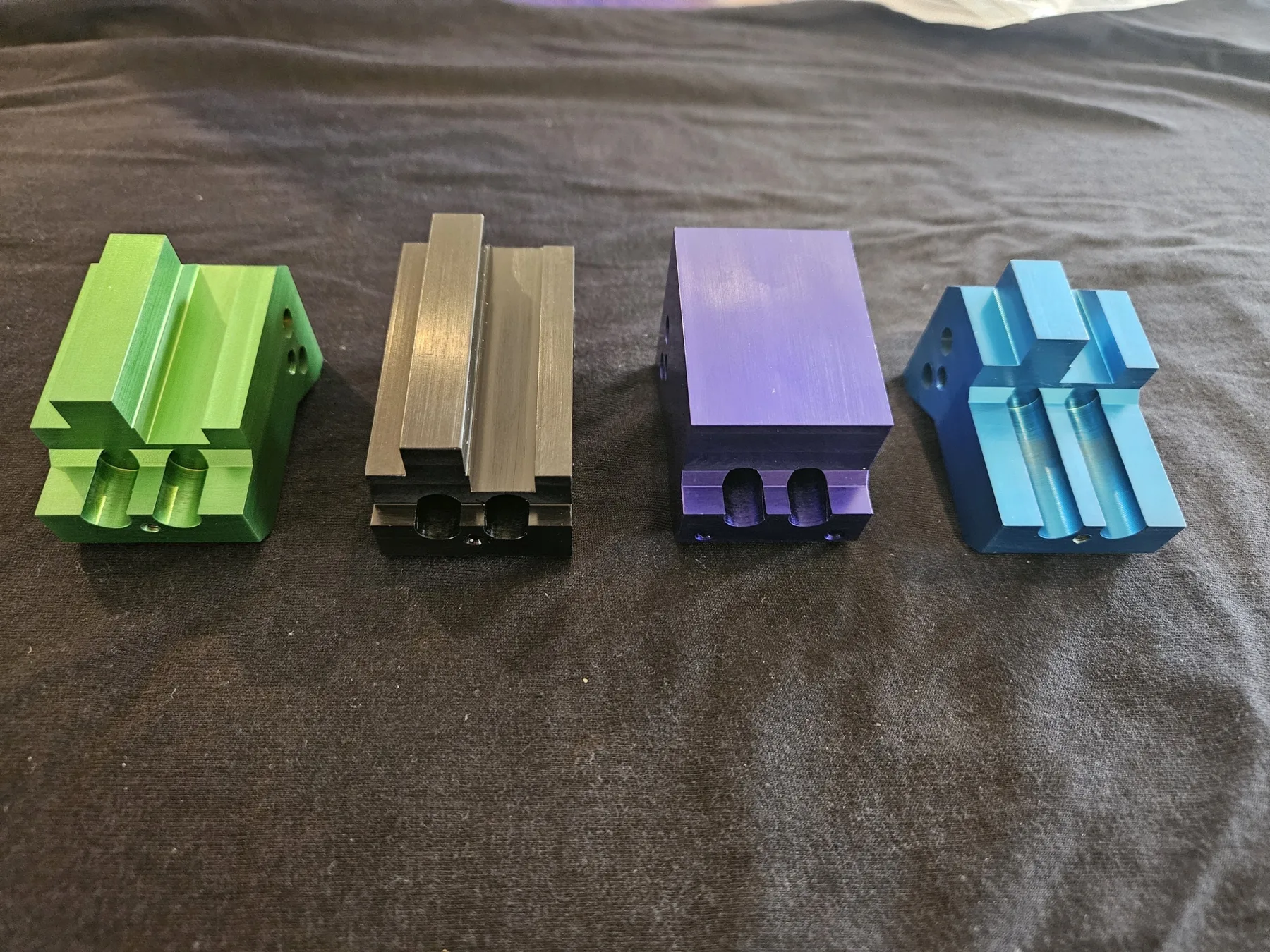 TYPE II DYED · CUSTOMER PARTS
Why shops send it here
A Finishing Partner Who Does Not Become the Bottleneck
Type II work comes to us mostly from machine shops. They can cut the part and they can hold the tolerance, but they do not want to own a tank line and the permits that come with it. So the finishing step becomes somebody else's department, and the only real question is whether that department hits its dates.
Ours does. Standard turnaround is 3 to 5 days from the day parts land on our dock, expedites move as fast as same day, and inside a 100 mile radius of Paoli we pick up and deliver on our own trucks so the parts never sit in a freight terminal. When we cannot hold a date, you hear it before you accept the quote, not on the day the parts were due.
Type II or Type III
Choosing Between Type II and Hard Coat Anodizing
Both types are covered by the same specification and both protect against corrosion, so the decision usually comes down to one question: does this part wear against something? If it does, Hard Coat exists for exactly that. If it does not, Type II does the job at a better price and gives you the full color range on top.
| WHAT DRIVES THE PART | TYPE II | TYPE III HARD COAT |
|---|---|---|
| Corrosion resistance | Strong | Strong |
| Color and appearance | Clear, black, full dye range | Clear, black, and dyed colors on request |
| Wear and abrasion | Suitable for general service | Built for it; the reason Type III exists |
| Cost profile | Lower, for the same corrosion protection | Higher, and worth it when wear leads |
There is a third case worth knowing about. If the part has to stay electrically conductive, neither type is right, because Anodizing builds an insulating layer. That is Alodine Chem Film territory. When a drawing is genuinely ambiguous, send it over and we will read the callout with you instead of guessing. The controlling specification is MIL-A-8625, published free on the government's ASSIST library at quicksearch.dla.mil.
How it runs in Paoli
A Type II Job, Dock to Dock
Quote From the Print
Send the drawing, the alloy if you know it, the class callout, and the count. The quote comes back by email with the delivery date already on it.
Rack and Clean
Parts are racked so current reaches every surface and solution drains off every feature, then cleaned and etched so the oxide grows on bare, uniform metal. Racking is where finish quality is decided, which is why the person who racks your parts is named on the About page.
Anodize, Dye, and Seal
The sulfuric bath grows the coating to the thickness on the callout. Class 2 parts take dye before the seal closes the surface over it.
Inspect, Pack, and Return
Quality control checks the batch against the print, parts are packed the way they arrived, and the truck or the box heads back. Standard clock, 3 to 5 days.
Questions
Type II Anodizing Questions
Does Type II Anodizing Change Part Dimensions?
Yes, slightly, and it is worth planning for. The oxide layer grows partly into the surface and partly out of it, so a tight-tolerance feature ends up marginally larger than it was machined. Put the coating allowance on the print and we finish to it. If the drawing is silent and the tolerance looks tight, we will flag it before we run, not after.
Can You Keep Threads and Bores Bare?
Yes. Threads, precision bores, sealing faces, and electrical contact surfaces can all stay uncoated. Mark them on the drawing and we mask and plug to it. See masking, plugging, and assembly for how that is quoted.
What Does Type II Anodizing Cost?
Minimum fees depend on which services a job requires, so we quote each one from the print and the count instead of publishing a rate card. Send the drawing and you will have a cost by email.
Which Aluminum Alloys Anodize Well?
Most machined alloys run well, including the common 6xxx series. Some high-copper and high-silicon alloys come out darker or less uniform, which is a property of the alloy, not of the process. Tell us the alloy on the request and we will set expectations on the quote.
Do You Handle Production Runs or Only Small Batches?
Both. Repeat production work is a core lane here, and process control is what keeps a reorder matched to the first run. We hold the recipe, so batch fifty looks like batch one.
Is Anodizing the Same as Painting?
No. Paint is a film applied on top of the metal and it can chip, peel, and add measurable thickness. Anodizing converts the surface itself, so there is nothing to peel off, the part keeps its machined feel, and the finish is as hard as the metal under it.
Where to go next
If Type II Is Not What Your Part Needs
Type II covers most machined aluminum, but not all of it. If your drawing points somewhere else, these are the pages that cover it, and the specification page explains how to read an 8625 callout element by element.
Type II on Your Print, Back in 3 to 5 Days.
Send the drawing and the count. If you need it faster than that, say so, and we will expedite as fast as same day.